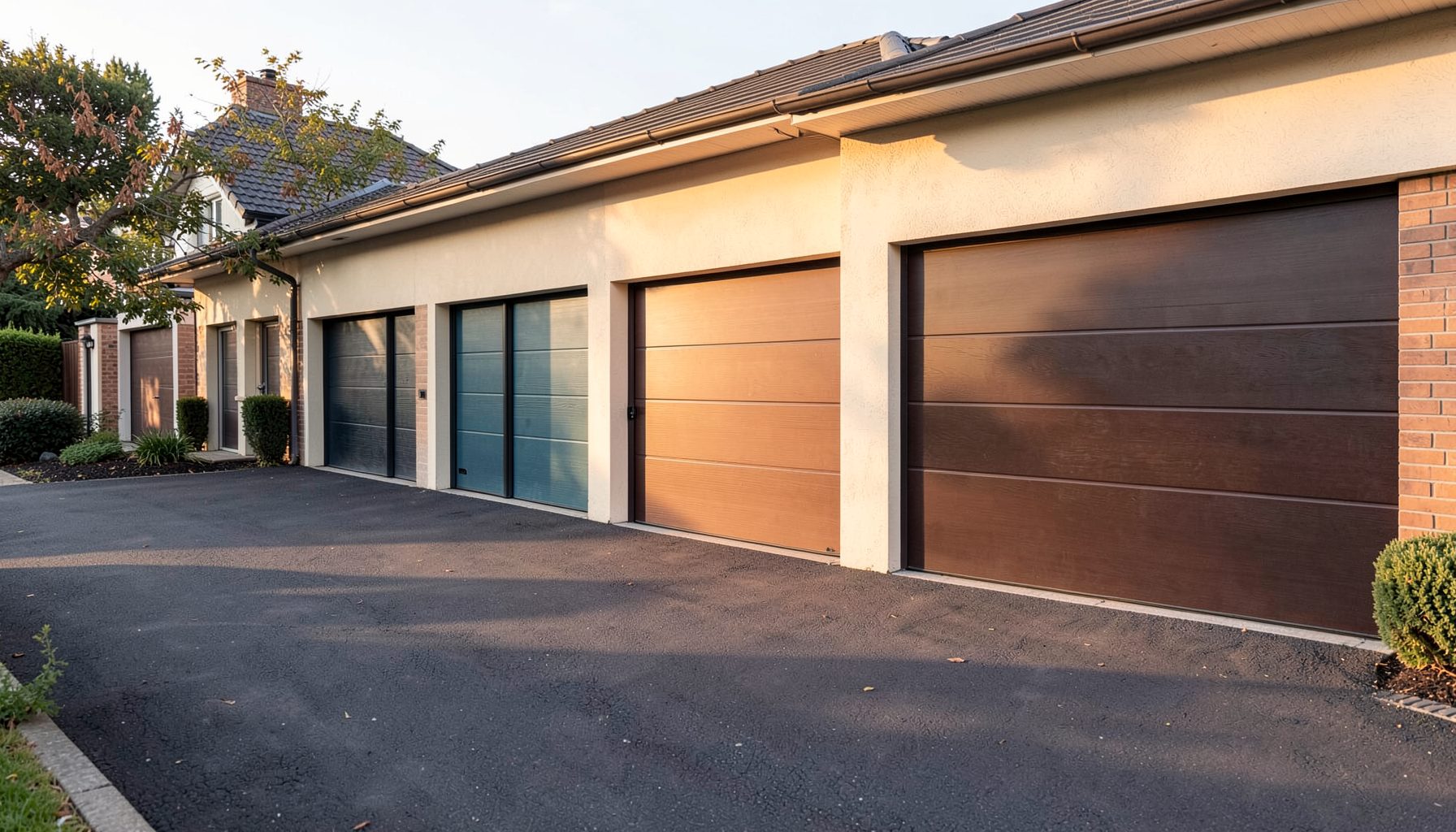
Steel
Steel is one of the most popular choices for modern garage doors. It's strong, relatively affordable, and available in a wide range of styles and colors. Many steel doors come with an insulated core, which can help with energy efficiency and noise reduction. A factory-applied finish resists rust, though scratches should be touched up promptly to prevent corrosion over time.
Aluminum
Aluminum doors are lighter than steel and naturally resist rust, making them a good fit for coastal or humid climates. They often feature a contemporary look with glass panels or sleek framing. The trade-off is that aluminum can dent more easily than steel, so it may not be ideal for households where the door sees heavy use or occasional bumps.
Wood
Wood garage doors offer a classic, warm appearance that many homeowners love. They can be custom-built to match architectural details and stained or painted in virtually any color. The main consideration is maintenance: wood needs regular sealing or painting to protect against moisture, warping, and insect damage. In exchange, you get a one-of-a-kind look that's hard to replicate with other materials.
Wood Composite
Wood composite doors blend recycled wood fibers with resins to create a material that looks like real wood but requires less upkeep. They resist rot and splitting better than solid wood and can be stained to achieve a natural appearance. Composite doors tend to be heavier, so a properly balanced spring system is especially important.
Fiberglass
Fiberglass garage doors are lightweight and resist salt-air corrosion, making them another option for coastal areas. They can be molded with a wood-grain texture and painted to suit your home's exterior. Fiberglass can become brittle in very cold climates and may fade or yellow with prolonged sun exposure, so consider your local weather when weighing this choice.
Vinyl
Vinyl doors are known for being tough and low-maintenance. They resist dents, scratches, and moisture, and they never need painting. The color goes all the way through the material, so minor scuffs are less noticeable. While the style selection is narrower than steel or wood, vinyl can be a practical pick for families looking for durability with minimal fuss.
When selecting a material, think about your climate, how much maintenance you're willing to do, and the overall style of your home. Each option has its strengths, and the right one depends on your priorities.